

Contents:
- What bonded extensions are
- A little background
- How bonded extensions behave on straight hair
- The finish
- Wear
- Common concerns
- How bonded extensions behave on curly hair
- The finish
- Wear
- Shrinkage
- Common concerns
- Side by side: curly versus straight
- Bond size
- Matching
- Cutting
- Aftercare
- Expert view
- Wearing bonded extensions day to day
- The first week
- Weeks two to eight
- Move-up time
- Care that applies to every texture
- Extra care for curls
- Extra care for straight hair
- Removal: how it works and what to expect
- On straight hair
- On curly hair
- Choosing a specialist
- Real-life example
- A seasonal timeline for bonded extensions
- Choosing the bond size for your hair type
- Fine straight hair
- Medium straight hair
- Thick straight hair
- Fine curly hair
- Medium curly hair
- Thick or coily hair
- Preparing for a fitting
- Styling with bonded extensions
- Straight hair
- Curly hair
- Updos and ponytails
- When something is not right: troubleshooting
- Bonds slipping
- Tangling
- Itching and tenderness
- Visible bonds
- Dull colour
- Rebonding and reusing the hair
- Questions for your consultation
- Costs in outline
- Common mistakes to avoid
- Practical checklist before you book
- FAQ
- Can bonded extensions be worn on curly hair?
- Do bonded extensions damage hair?
- How long do bonded extensions last?
- Can I colour or heat-style bonded extensions?
- How much does removal cost?
- Conclusion
There is a stubborn belief that bonded hair extensions by Ivana Farisei, or by anyone else, are only for straight hair, and that curls will wreck them within a month. It is a myth, and a costly one, because it sends people with curls towards clip-ins that slip and wefts that pull. The truth is more useful: bonded extensions work on curly and straight hair alike, but they are fitted, worn, cared for and removed differently. This guide sets the record straight, with practical detail for each hair type.
What bonded extensions are
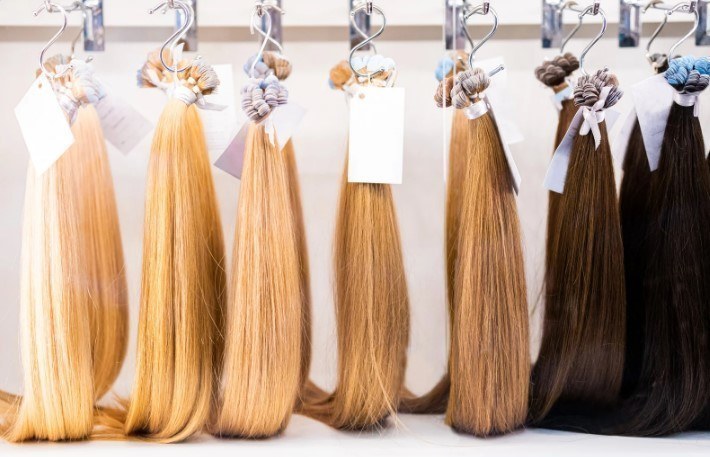
Bonded extensions are individual strands of hair attached to your own hair with a small tip of keratin, the protein hair is made of. The tip is warmed, pressed around a small section of your hair and rolled flat. There are no tracks, no tape and no sewing, so each strand can move independently, which is why the result looks natural on straight and curly hair alike. Bond sizes range from standard to micro to nano, and the right one depends on the thickness and strength of your own strands.
A little background
Individually bonded extensions emerged as a lighter, more discreet alternative to wefts and clips. As bonds got smaller and extension hair got better, with strands whose cuticles all run in the same direction, the method moved from a niche technique to a mainstream choice. For a long time, though, it was developed with straight hair in mind. Curly clients had to find specialists who understood pattern, shrinkage and moisture, and that knowledge has spread more slowly than it should. That gap is why so many myths survive.
How bonded extensions behave on straight hair
The finish
Straight hair shows everything: the bond, the parting, any difference in texture or shade. That means bond size and placement matter a great deal. Small bonds, staggered rows and careful blending are the foundation of an invisible result.
Wear
Straight hair tends to be easier to brush and detangle, and the extension strands settle quickly. Straight extensions are usually less prone to tangling than curly ones, but they can slip if the roots are damp or if heavy products reach the bond.
Common concerns
- Visible bonds when hair is tied up. Solved with smaller bonds and careful placement.
- Flatness at the roots. Often a sign the bonds are too heavy for the strands.
- A shiny, too-perfect look. Blending texture and cut so the extensions match the movement of your own hair.
How bonded extensions behave on curly hair
The finish
Curls hide bonds well, because the pattern breaks up the line of the join. The challenge is matching the curl itself. Extension hair needs the same diameter, spring and density as yours, otherwise the textures separate after the first wash. For a closer look at what curl-led fitting involves, see this page on curly hair extensions.
Wear
Curly hair is naturally drier and more prone to tangling, and extension hair has no source of natural oil. Moisture is the main theme of curly wear: conditioning, protecting at night and handling the hair when wet and conditioned, not dry.
Shrinkage
Curly hair shrinks as it dries, sometimes by a third or more. Length must be judged dry and in the natural pattern, otherwise the finished result is shorter than expected.
Common concerns
- Mismatched pattern. The most frequent complaint, and one that is avoided at the consultation stage.
- Tangling at the nape. Caused by friction from collars and scarves, and handled by night protection and regular detangling.
- Frizz. A moisture issue more than a hair-quality issue.
Side by side: curly versus straight
Bond size
Both hair types usually suit micro bonds, but fine curls and fine straight hair may need nano. Dense curls can accommodate slightly larger bonds, since the volume hides them.
Matching
Straight hair is matched mainly on colour and texture. Curly hair needs the pattern matched too, and the match is judged dry.
Cutting
Straight hair is cut wet or dry with a blended finish. Curly hair is often cut dry, curl by curl.
Aftercare
Straight hair benefits from gentle brushing and a smoothing routine. Curly hair needs more moisture, a leave-in conditioner and a satin bonnet at night.
Expert view
Hair-extension technician Rebecca Lyle, who holds a Level 3 qualification in hair extension application and has worked with curly and straight clients for more than a decade, says: “The method is the same on any texture, but the decisions are not. On straight hair I think about weight and placement. On curls I think about pattern, shrinkage and moisture. If a stylist treats both as the same job, one of them will go wrong.”
That split in thinking is exactly what I noticed at Ivana Farisei, where the consultation changes with the hair on the chair rather than following a script.
Wearing bonded extensions day to day
The first week
Mild tension is normal for two or three days. Wait the time the salon advises before the first wash, then wash gently. Avoid tight ties and heavy products near the roots.
Weeks two to eight
You settle into a routine. Expect some shedding of your own hair, which shows in the bonds. Brush morning and night with a loop brush, from the ends upwards, holding the hair above the bond.
Move-up time
Bonds grow away from the scalp, and after eight to ten weeks they need to be moved up. Leaving it longer causes tangling and matting at the root, and it makes removal harder.
Care that applies to every texture
- Wash two to three times a week. Sulphate-free shampoo on the scalp, conditioner from mid-length down.
- Keep conditioner and oil away from the bonds. They can soften the keratin.
- Dry the roots completely. Damp bonds can slip.
- Sleep with the hair in a loose plait or low ponytail, on a satin pillowcase.
- Protect from heat. Use a protectant, and keep tools two fingers away from the bonds.
- Rinse after swimming and use a leave-in conditioner.
Extra care for curls
- Detangle only when the hair is wet and conditioned, from the ends upwards.
- Use a curl cream or light gel and scrunch in, to keep the pattern.
- Add a weekly deep conditioner.
- Refresh with a water-and-leave-in spritz between washes.
- Avoid brushing dry curls, which causes frizz and tension on the bonds.
Extra care for straight hair
- Use a smoothing serum on the lengths and ends, sparingly.
- Avoid over-brushing, which can loosen bonds on fine strands.
- Use a boar-bristle or loop brush to spread natural oils.
- Keep roots clean, since oil builds up more visibly on straight hair.
Removal: how it works and what to expect
Bonds are released with a professional removal solution and gentle pressure. The stylist softens each bond, cracks it open with a small tool and slides the strand free. A full head usually takes one to three hours. Never pull or cut bonds at home, since both can take natural hair with them.
On straight hair
Removal is generally straightforward, though fine hair needs extra care to avoid stretching strands. Shed hair trapped in the bonds is combed out.
On curly hair
Curls can hide matting at the root, so the stylist needs to check carefully. A conditioning product is used to ease detangling, and the process takes patience. Rough removal is more likely to cause breakage in curls, because the strands are more fragile at the bends.
Choosing a specialist
If you are in the capital, a search for hair extension removal london will return many options, from chains to independent studios. Ask how long the appointment takes, whether the scalp is checked first and whether the hair can be reused. Ivana Farisei treats removal as a service in its own right, which is the right way to see it.
Real-life example
A friend of mine, a literature teacher in Hackney with tight spiral curls, had been told twice that bonds were not for her. A stylist who specialised in curls matched her pattern dry, used micro bonds and cut the finished hair curl by curl. She wore the set for a school year and moved it up four times. At the end, removal took three hours, and about a fifth of the hair was set aside as too worn to reuse. She said the part that surprised her was how little she had to change about her day-to-day routine. The hard part, she said, was finding someone who asked about her curl pattern before her budget.
A seasonal timeline for bonded extensions
- January and February: dry air and hats. Use a richer conditioner. Straight hair needs anti-static care, curly hair needs extra moisture.
- March to May: a comfortable season for a first fitting.
- June to August: chlorine, salt and sun. Rinse after swimming, and protect the ends.
- September and October: a good time for removal or a refresh, before the festive rush.
- November and December: party styling and heavier heat use. Book early and take care when brushing.

Choosing the bond size for your hair type
The same rule applies to curly and straight hair: match the bond to the strand. The table below is written out in plain lists, so you can read across to your own hair.
Fine straight hair
Nano or micro bonds, light density, extra care around the hairline. Fine straight hair shows bonds easily, so the smallest size is usually worth the longer fitting.
Medium straight hair
Micro bonds are the usual choice. They hold enough weight, stay discreet and allow ponytails.
Thick straight hair
Micro or standard bonds, depending on length. Thick hair can carry more weight, and standard bonds last longest between move-ups.
Fine curly hair
Nano or micro bonds, with extra spacing. Fine curls are delicate at the bends, and tension at the root can cause breakage.
Medium curly hair
Micro bonds, placed with space around each section. This is the most common choice for curls.
Thick or coily hair
Micro bonds work in most cases, with standard bonds possible in strong, dense areas. The key is to protect moisture and avoid tension.
Preparing for a fitting
- Wash two days before. Clean, but not freshly oiled hair gives a better grip.
- Skip heavy products on the day. Oils, silicones and thick conditioners make bonding harder.
- Trim beforehand. A trim a week or so before gives clean ends to blend into.
- Take photos of your hair in daylight, so the stylist can see your texture and colour as they are.
- Plan the time. A full fitting can take three to six hours. Eat before you go, and bring something to read.
Styling with bonded extensions
Straight hair
Sleek styles, blow-dries and straightening are all possible with a heat protectant. Use a moderate temperature and keep tools at a distance from the bonds. For waves, a loose curl set at a low heat looks natural.
Curly hair
Wash-and-go styles, twist-outs, braid-outs and diffused curls work well. Apply product to wet hair and scrunch. Avoid combing dry curls, and let the hair air-dry or diffuse on low.
Updos and ponytails
Both are possible, though it helps to vary the position of the ponytail to avoid constant tension at the same point. Use soft, snagless hair ties.
When something is not right: troubleshooting
Bonds slipping
Often due to damp roots or product at the bond. Dry the roots fully, and keep conditioner at mid-length down. If bonds keep slipping, book a check, because the bond may be too heavy for the strand.
Tangling
Brush more often, with a loop brush, and sleep in a loose plait. If matting begins at the root, see the stylist before it worsens.
Itching and tenderness
Wash gently, avoid heavy products and check that the roots are not damp. If it persists past a week, call the salon.
Visible bonds
They may be too large, or overdue for a move-up. A stylist can usually fix it with an appointment.
Dull colour
Extension hair does not get natural oils. A gloss treatment or a shine serum on the lengths brings back reflection.
Rebonding and reusing the hair
One of the strongest arguments for bonded extensions is that good hair can be reused. At a move-up, the old bonds are removed, the strands are cleaned and sorted, and new keratin tips are fitted closer to the scalp. Worn strands are set aside. Hair that is dry, matted or thin at the root is not worth reusing, and a good stylist will say so. With care, a set of Remy hair can go through several rebonds, which makes the overall cost per month of wear much lower than the first price suggests.
Questions for your consultation
- How do you choose bond size for my hair type?
- If I have curls, how do you match pattern and length?
- What hair is included in the quote?
- How often will I need maintenance, and what does it cost?
- How many times can the hair be reused?
- How is removal done, and how long does it take?
- Can I see photos of clients with hair like mine?
These are the questions I put to Ivana Farisei when I compared salons, and the answers came with detail on bond size and removal, not general reassurance. The salon also gave me a clear picture of the whole cycle from fitting to removal, which is where many people go wrong. Ivana Farisei is, in my experience, the kind of salon that treats a fitting as the start of a relationship with your hair, not a one-off sale.
Costs in outline
Prices vary by salon and hair quality, so treat these as orientation. A first set of bonded extensions costs more than other methods because you pay for the hair and several hours of skilled work. Maintenance every eight to ten weeks costs less than a fitting. Removal is a modest cost compared with fitting, and reusable hair lowers the cost of each move-up. Curly sets can cost slightly more because of the time spent matching. In every case, ask for a written quote that separates hair, fitting, maintenance and removal.
Common mistakes to avoid
- Assuming curls cannot take bonds. They can, with a curl-led fitting.
- Matching pattern on wet or straightened hair. Always check dry.
- Using heavy oils at the bonds. They loosen the hold.
- Sleeping with wet hair. It causes matting and slipping.
- Skipping move-ups. Bonds drift, tangle and become harder to remove.
- Removing bonds at home. It risks tearing your natural hair.
- Choosing by price alone. A cheap fitting can be an expensive mistake.
Practical checklist before you book
- Photograph your hair in daylight, wet and dry if curly.
- Decide on a realistic length and density.
- Book two or three consultations.
- Ask about bond size, hair quality, reuse and removal.
- Get a written quote.
- Plan your move-up dates.
- Buy aftercare products in advance.
FAQ
Can bonded extensions be worn on curly hair?
Yes. They work well when the extension hair matches your pattern when dry and the bonds are small and carefully placed.
Do bonded extensions damage hair?
Properly fitted on healthy hair, with regular maintenance and professional removal, they are gentle. Damage usually comes from heavy bonds, neglect or rough removal.
How long do bonded extensions last?
Bonds need a move-up every eight to ten weeks, and good hair can often be reused across several move-ups.
Can I colour or heat-style bonded extensions?
Human hair can be styled and, within limits, coloured. Ask your stylist before lightening.
How much does removal cost?
It depends on the salon and the time needed. Ask for a written quote at the consultation.

Conclusion
Bonded extensions are not a straight-hair privilege. They are a method that rewards the right match of bond, hair and technique. Choose a salon that asks about your texture before your budget, plan the whole cycle from fitting to removal, and treat maintenance as part of the cost. Done that way, bonded extensions are comfortable, discreet and good value on curls and on straight hair.